
Keeping jelly cups workable
6 min read · written in the studioPaint in a sealed cup keeps because the lid holds the water in. Almost every stiff cup we hear about traces back to a lid that went on crooked, or a session that ended with the box still open on the desk.
What actually stiffens a cup
Gouache does not cure. It loses water, and it loses it from the top down. A cup left open for an afternoon grows a rubbery film across the surface while the paint underneath is still soft. Push a brush through the film and you drag lumps of half dried binder into your mix, which is where the streaks come from.
The fix is not more water. Flooding a cup thins the paint below the point where it covers in one pass, and the extra water sits on top for days. Keeping the lid honest is cheaper than correcting either problem.
The routine at the end of a session
- Lift out any brush still parked in a cup. A brush left in the well wicks water out of the paint overnight.
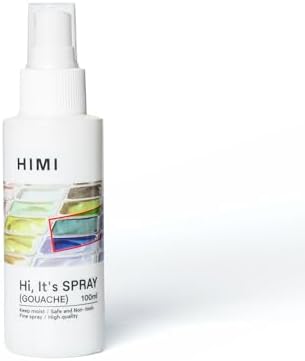
- Give each open cup one pass with a fine mist bottle. One pass, not four. You are replacing what evaporated, not adding a layer of water.
- Wipe the rim of the cup and the inside face of the lid. Dried pigment on the rim is what stops a lid from seating flat.
- Close the box and put it down level. A cup on its side leaks into the neighbour, and a pale well never fully recovers from that.
Bringing a stiff cup back
A cup that has gone leathery is usually recoverable. Mist the surface, close the lid and leave it overnight. The water works down through the skin on its own. In the morning, stir with the flat of a palette knife rather than a brush: a brush ferrule splays out on stiff paint and never sits straight again.
If it is only the top few millimetres that hardened, lift the crust off in one piece and keep painting from the soft body underneath. Do not stir the crust back in.
| What you see | Usual cause | What to do |
|---|---|---|
| Skin across the surface | Lid left off between sessions | Mist once, close overnight, lift the skin in the morning |
| Water pooling on the paint | Too much misting, or a wet brush parked in the well | Leave the lid off for an hour, then close as normal |
| Grey cast in a pale colour | A dirty brush went straight into a light well | Scrape the fouled surface off and work from underneath |
| Lid will not sit flat | Dried pigment on the rim or in the gasket groove | Damp cloth around the rim and along the seal |
| Paint covers thin in one pass | The well was flooded and is still diluted | Work from the edge of the well where the body is thicker |
The gasket is the part people forget
Every travel box in the range seals on a silicone strip seated in the lid. It is soft enough to take a full print of whatever it presses against, so a fleck of dried gouache in the groove holds the lid open by half a millimetre. That is enough to dry a whole box over a fortnight. Run a damp cloth along it whenever you clean the rims.
Storage between projects
Flat, closed, and somewhere the temperature does not swing. A box on a sunny windowsill loses water through the seal faster than one in a drawer, and a box left in a car over summer will need reviving before the next session. If a palette is going to sit for a month, mist it before you shelve it rather than after you open it.
From the range
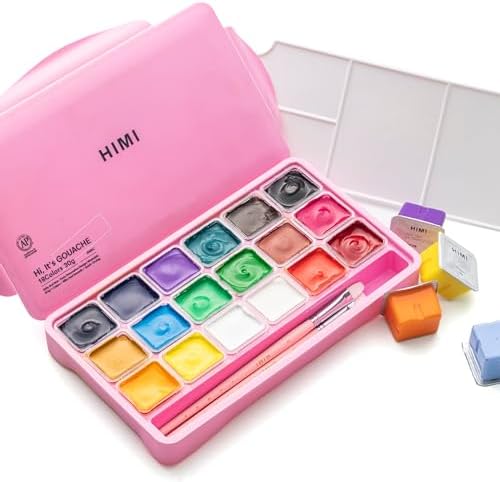 18 colors
Jelly cup
Gouache Paints Set, 18 Colors, 30g, jelly gouache paint set
- Colors
- 18
- Per cup
- 30 g
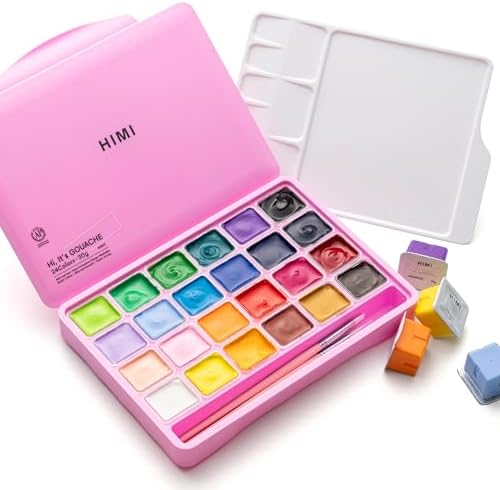 24 colors
Jelly cup
Gouache Paints set with 3 Paint Brushes, 24 Colors, 30g
- Colors
- 24
- Per cup
- 30 g
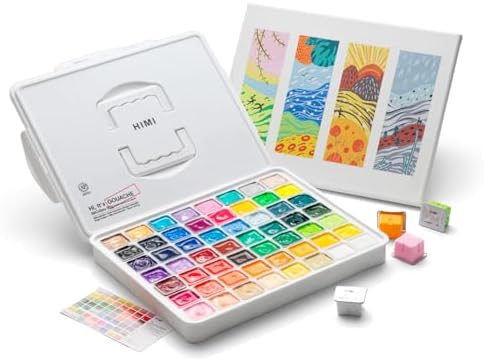 56 colors
Jelly cup
Gouache Paint Set, 56 Colors x 30g Unique Jelly Cup Design in a Carrying Case
- Colors
- 56
- Per cup
- 30 g